
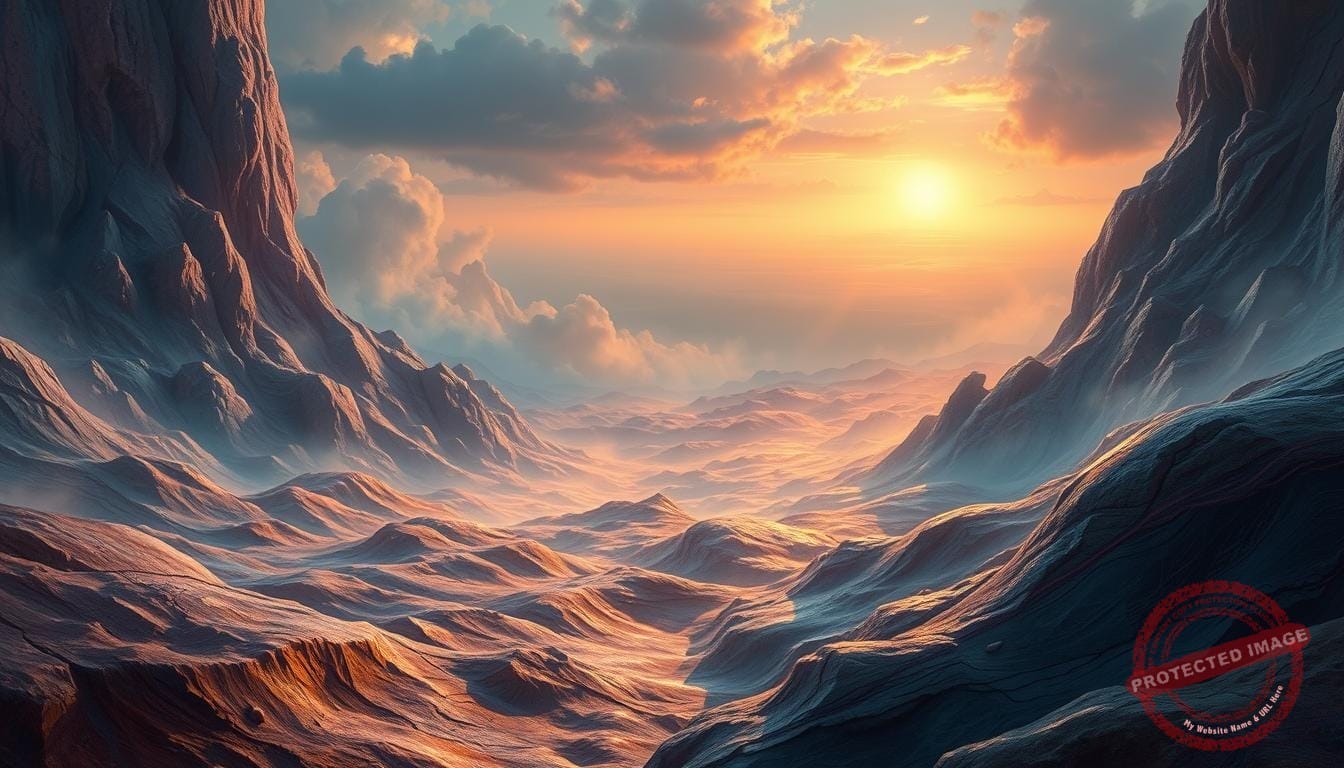
Surprising fact: studies show viewers judge trust and realism within the first 100 milliseconds of seeing an image.
“Painting is an illusion, a piece of magic, so what you see is not what you see.” — Philip Guston.
I invite you to step through a door I open to enhancing depth as a crafted illusion. I guide your eye to travel across space that feels present and real.
I explain why believable space matters, and which tools shape it. Perspective, value, and color act as companions to lead the viewer from sharp foreground to distant atmosphere.
My work shows how vanishing points, foreshortening, edge control, and light behavior let any piece feel dimensional over time. Visit my Mystic Palette Art Gallery to see living examples or contact me for custom requests and commissions.
Key Takeaways
- Believable space changes how a viewer reads a scene.
- Simple rules—vanishing points and value—create strong realism.
- Small, consistent choices compound to improve your work over time.
- Atmospheric fades and edge control guide focus and mood.
- Visit Mystic Palette Art Gallery or reach out for custom guidance.
Why enhancing depth in digital art matters right now
Right now, believable space is your fastest way to stop a scroll and hold a viewer‘s gaze.
I believe lifelike composition creates immediate presence. Overlapping shapes, size shifts, and atmospheric cues help the eye read distance and mood quickly.

Good space tells a clearer story. That idea matters because it gives your focal points more weight and your message more clarity on phones and desktops alike.
Contemporary artists who mix classic craft with nimble workflows win attention now. I offer simple tips—use an intentional value range, simplify distant planes, and keep edges soft far away—to lift readability across feeds.
“Thoughtful space shortens the distance between what you imagine and what a viewer feels.”
For a practical guide to create depth in your work, follow the techniques I outline here and in the gallery.
Understanding depth and perspective: the foundation of believable space
I start by separating what the eye feels from the tools we use to show it. Depth is the perceived distance between elements. Perspective is the mapping system—vanishing points, horizon, and converging lines—that lets a flat surface read as space.
Depth vs. perspective: perceived distance and the tools to map it
Foreground objects keep richer color, crisp detail, and stronger contrast. Background shapes go lighter, less detailed, and more muted. Foreshortening and vanishing points are the quick, reliable methods I use to sell that feeling with a single brush stroke.
What the viewer’s eye looks for in a convincing scene
The viewer trusts scale shifts, overlap, and edge variance. Soft edges recede; hard edges push forward. Value hierarchy acts as the grammar of space—without it, perfect lines and perspective still read flat.
- I test compositions in grayscale first to confirm major elements read clearly.
- Use focal contrast—tight detail and silhouettes—so the viewer lands where you want.
- A simple example: lower contrast and cooler tones for distant planes; warmer, sharper tones for the near plane.
| Cue | Foreground | Background |
|---|---|---|
| Value | High contrast, rich darks | Low contrast, softer midtones |
| Detail | Crisp edges, visible texture | Muted detail, softer edges |
| Color | Warmer, saturated | Cooler, desaturated |
Perspective techniques that add depth to any scene
A clear horizon and confident vanishing points give a scene immediate order. I explain a set of reliable methods that help you stage space, mood, and scale with purpose.
Linear, one-, two-, and three-point setups
I use linear perspective when parallel lines converge toward vanishing points to anchor architecture and interiors.
- One-point: a single vanishing point pulls the eye down corridors, streets, or long interiors.
- Two-point: rotate forms to show corners and angled buildings with balanced verticals and twin directions.
- Three-point: add a vertical vanishing point for dramatic tall or plunging views.

Aerial, curvilinear, fish-eye, and isometric
Aerial perspective mutes distant color and detail: lift values, cool hues, and soften contrast to suggest vast space.
Curvilinear and fish-eye bend lines to convey motion and immersive viewpoints. Isometric keeps parallel lines steady for readable, stylized layouts.
- I recommend short studies per method so artists build a practical vocabulary of perspective options.
- Use these techniques to match the story you want a piece to tell.
Value, contrast, and edges: guiding the eye through your piece
I build a tonal roadmap first, then place accents so the viewer reads the story at a glance. A clear value range is the control that steers attention from foreground to background.
Strategic contrast to carve form and create focal points
I use darker values and higher contrast up front to anchor forms. Lighter values and softer contrast fall away, which lets planes breathe and suggests distance.
I stack contrast where it matters: subject, silhouette, and key texture. That makes your work readable even at thumbnail size.
I soften distant edges, reduce detail, and simplify background elements so planes separate naturally. Foreground accents stay crisp and intentional.
- I use brushes purposefully: hard rounds for cuts, soft brushes for roll-offs, textured tips for tactile interest.
- Selective sharpening locks focus; nonessential areas fade to support rhythm and flow.
- A quick grayscale check confirms the shapes and light paths guide the eye exactly where I want it.
| Cue | Foreground | Background |
|---|---|---|
| Value | Darker, high contrast | Lighter, low contrast |
| Edges | Sharp where focal | Soft, blended |
| Detail & texture | Visible, varied | Simplified, minimal |
Color theory for depth: harmonies, complements, and mood
A well-chosen palette can make a flat scene breathe with life and intent. I pick a harmony first—complementary for drama, analogous for calm, or triadic for energy—and translate it into a flexible set of swatches I reuse across projects.
Picking a color harmony and building a signature palette

I save a signature palette as swatches so decisions stay fast and consistent. This habit tightens my brand as an artist and speeds every painting. I document temperatures, key notes, and common mixes for future series or client work.
Using complementary color shifts for light and shade
Instead of pure white or black, I shift lights with a warm complement and shadows with its cooler opposite. That keeps tones rich and avoids chalky highlights or muddy darks. A soft glaze with a light brush unifies planes while keeping edge intent.
Color psychology to support narrative and emotion
I use color meaning with purpose: red to provoke or signal danger, blue to calm and soothe. Quick color thumbnails help me test a mood fast. These small practices save time and make final edits clearer.
- Tip: vary chroma by plane—saturated foregrounds, softened distant hues.
- Document palettes and lighting notes to recreate tones reliably.
Lighting essentials: primary, reflected, and ambient light
Set a confident key light first, then let reflected cues place your objects in a world.
One clear source defines form and tells the viewer where the eye should rest. I pick a warm highlight rather than pure white so the light reads physical and keeps the piece from looking chalky.
Warm highlights, avoid flat white and black
Pure white highlights flatten texture. Instead I nudge highlights toward a warm cream or pale gold. Pure black is the same trap for shadows.
I choose color-rich darks that hold contrast and keep chroma alive. Complementary shifts in shadow and light preserve form and push a sense of distance.
Reflected light and environment on surfaces
I paint environmental bounce—blue sky casts or green foliage spills—onto shadow planes. That locks a surface into its setting and sells realism.
- I set one key light to map form, then refine ambient levels for mood and readability.
- I watch how light wraps over curvature; skin needs softer ramps, metal wants sharp terminators.
- I use soft-falloff brushes to blend ramps, then reinforce edges where structure matters.
- I reserve Linear Light and Vivid Light for subtle passes; overuse flattens a scene.
“Consistent lighting family keeps shadows aligned and speculars believable.”
Brushes, layers, and blending modes: digital tools that transform form
A reliable stack of layers and a handful of trusted brushes keeps my process fast and flexible.
I start by lowering my sketch opacity and blocking in strong base shapes. Then I use clipping masks to keep paint inside forms so edges stay clean and edits stay quick.
Clipping masks, layer order, and non-destructive painting
I organize layers with base color at the bottom and shadow and light passes above. I label and color-code groups so complex builds remain navigable.
Non-destructive workflows let me test changes without losing earlier passes. I group adjustments, add masks, and save brush presets tied to a given surface or material.
When to use Linear Light and Vivid Light without overdoing it
I merge base with clipped layers before applying Linear Light so the effect reads across the intended shapes.
- I use Linear Light sparingly to boost speculars and sharp highlights without blowing values.
- Vivid Light is for warm glow and selective pop on existing light families—never as a first pass.
- My go-to technique: final, subtle passes after the structure is locked, preserving flexibility throughout the build.
Composition that adds depth: rule of thirds, leading lines, and simplification
Careful placement of forms and empty space makes a scene feel alive and layered. I start by mapping the canvas into thirds and seating my subject on an intersection to add balance and natural energy.
Placing elements, managing space, and removing distractions
I angle leading lines—roads, rivers, or fallow fences—to steer the viewer into the picture. Those lines create clear pathways and reinforce perspective while supporting the narrative.
Foreground framing is another tool I use: branches, rocks, or walls form a layered frame that signals scale and overlap without extra explanation.
- Simplify aggressively: clear clutter so key elements breathe and hierarchy reads at a glance.
- Avoid tangents: separate overlaps so forms don’t flatten or confuse cues.
- Weight shapes: use negative space for resting spots and to shape rhythmic movement.
- Quick thumbnails: tiny value sketches let me test layouts fast—a practical tips habit that saves time.
| Compositional Cue | Purpose | Practical Step |
|---|---|---|
| Rule of Thirds | Balance & energy | Place focal points at intersections |
| Leading Lines | Guide the viewer | Angle paths toward the main subject |
| Foreground Framing | Layer planes | Add subtle shapes to imply scale |
| Simplification | Clear hierarchy | Remove or mute distractors |
Step-by-step workflow: from sketch to dimensional finish
I begin each piece with a loose gesture sketch that stakes out movement and scale. That quick drawing sets perspective and major lines so the rest of the process is guided, not guessed.

Sketch, block-in, and edge refinement
I block base shapes beneath the sketch using a broad brush to mark value groups. This makes the light and shadow families clear before details take over.
I use clipping masks for contained passes so edits stay clean. Then I refine edges—mixing crisp accents with soft transitions—to avoid one-note smoothness.
Shading, complements, and glazing
I shade with complementary hues rather than pure white or black. This keeps color rich and believable and gives the work a warmer life.
After merging the base with clipped layers, I apply subtle Linear Light only where it supports the planned family of lights.
I add reflected light and ambient notes to tie forms to their setting, then check values in grayscale to confirm structure.
- Keep tools lean: a few layers, masks, and a trusted brush lets me focus on decisions that move the piece forward over time.
- Glaze last: low-opacity passes unify temperature and saturation without heavy-handed edits.
Common mistakes that make art look flat—and how I fix them
A common culprit for a lifeless picture is trusting pure white and pure black too often. Those extremes kill subtle form and make surfaces chalky or dead.
Overusing white highlights and black shadows
As an artist I avoid pure white highlights. I nudge lights toward a warm tint that matches the key light. This preserves texture and keeps a painting lively.
I also swap pure black for color-rich darks. Shadows with chroma feel natural and help space breathe.
Uniform edges, equal detail everywhere, and value compression
I vary edges: hard for focal planes, soft for remote shapes. That simple rule restores dimensionality fast.
I stop value compression by expanding contrast near the subject and relaxing it elsewhere. I limit detail outside focal zones so the eye can move freely.
- Reflected light: I add it to bind objects to their setting and confirm the light family.
- Blending modes: I use Linear Light or Vivid Light as a final polish, not a shortcut.
“Small corrections to value and edge control often save a whole composition.”
| Mistake | Symptom | Fix |
|---|---|---|
| Pure highlights/shadows | Chalky or dead surfaces | Warm highlights; chromatic shadows |
| Uniform edges | Flat planes, no focus | Mix hard, firm, soft transitions |
| Value compression | Low contrast; muddled read | Broaden range; stack contrast at subject |
| Equal detail | Visual fatigue | Prioritize focal texture; relax support elements |
Deliberate practice routines to add depth over time
My method breaks practice into brief, repeatable drills that stack over weeks. I focus on small wins so skills compound and stay motivating.
Short drills isolate one decision at a time: value scales, edge control, and mini perspective studies. I schedule these as daily ten- to twenty-minute exercises. This keeps momentum high and mistakes obvious.
Short drills: value, edges, and perspective
I plan short drills—value scales, edge exercises, and perspective mini-studies—to train fluency. I use references intentionally to teach the eye how scale shifts, atmospheric fades, and material light behave.
Long studies: lighting and environment
Longer studies lock lessons into a workflow. I run lighting scenarios—overcast, golden hour, mixed indoor—to see how color and value change over time. I analyze masters who excel at space and mood and reverse-engineer their hierarchies.
Practical routine: rotate drills by week (edges, silhouettes, aerial work), set measurable goals (five thumbnails a day, two lighting variations per scene), and keep a drawing log with before/after snapshots.
“Deliberate practice beats unfocused drawing; small habits deliver steady progress.”
- I end each cycle with a longer study that combines lessons into a cohesive piece.
- Track goals, review references, and apply tips regularly so progress is visible to artists at any stage.
Visit my Mystic Palette Art Gallery for living examples—and contact me
See concrete examples of my method where color, value, and reflected light work together to tell a story.
I curated a selection so you can study how overlapping planes, atmospheric perspective, and complementary shading unify scenes.
Explore pieces that demonstrate depth, light, and color in action
You will observe reflected light—sky blues and foliage greens—catching on shadow planes to lock forms into their setting.
Note how Linear Light and Vivid Light appear as subtle finishers, not shortcuts, preserving texture while adding warmth.
For custom requests or inquiries, please contact me
I welcome commissions and tailored work. Tell me your story and I will design a piece that carries your mood forward.
- What I offer: concept sketches, palette proposals, and clear timelines.
- Who benefits: artists and collectors seeking one-of-a-kind examples or a custom commission.
- How to start: reach out with your idea and I’ll respond with next steps and a collaborative plan.
Conclusion
, Small, deliberate choices build scenes that feel present the moment a viewer sees them.
I close by reminding you that dimensional art grows from clear perspective, a tight value plan, and color that respects light. Use complementary shading, reflected light, and careful edges so each piece reads as confident and believable.
Your viewer registers hierarchy and rhythm instantly. Simplify where needed and let focal points lead the eye. Short, steady practice blocks turn insights into reliable habits over time.
Visit the Mystic Palette Art Gallery for reference and inspiration. If you want critique, coaching, or a commission, contact me and we’ll plan your next step as an artist.
FAQ
What simple steps can I take to add more perceived space to my paintings?
I start with a clear value thumbnail, then establish a horizon and a simple perspective grid. I block in big shapes first, push distant forms toward lighter, cooler tones, and sharpen edges only where I want the viewer to stop. Small deliberate contrasts and one or two warm focal accents usually sell the illusion quickly.
How do perspective types change the mood of a scene?
I choose one-point for calm, frontal compositions, two-point for dynamic architecture, and three-point when I want drama or towering scale. Curvilinear or fish-eye lenses create energy and distortion, while isometric keeps a graphic, game-like clarity. Each system guides how the eye travels through the piece.
Which lighting setup best reveals form without flattening it?
A three-point-inspired approach works well: a strong primary light to model form, a subtle fill or ambient light to keep midtones readable, and reflected light to hint at material and environment. I avoid pure white highlights and pure black shadows; instead I pick slightly colored lights that relate to the scene.
What color strategies help separate planes and create atmosphere?
I rely on value, temperature, and saturation shifts. Cooler, desaturated colors recede; warmer, saturated ones come forward. Using complementary shifts for shadows or rims can boost form. Building a limited signature palette first helps me maintain harmony while pushing space with deliberate shifts.
How can I use brushes and layers to keep work flexible?
I paint non-destructively: separate flats, local color, and lighting on named layers. I use clipping masks for edges, texture brushes at low opacity for surface, and blending modes like Overlay or Soft Light sparingly. When I need punch, I try Linear Light or Vivid Light on a separate layer and lower the opacity until it sings.
What common mistakes flatten an image and how do I correct them?
Flatness often comes from value compression, uniform edge treatment, or equal detail everywhere. I fix these by increasing value range, softening distant edges, and simplifying secondary areas. I also reduce pure white and pure black usage and reintroduce midtone contrast to regain depth.
How do I practice to improve spatial sense without spending weeks on one piece?
I mix short drills and targeted studies: five-minute value thumbnails, 30-minute perspective sketches, and one-hour lighting studies focused on a single object. Weekly longer pieces let me apply lessons. Consistent, varied practice accelerates skill more than repeating the same exercise.
Can color psychology help tell a spatial story?
Absolutely. I use warm hues to draw attention and suggest proximity, cool hues to imply distance or calm, and muted tones for background atmosphere. Color choices support narrative—sunset palettes convey nostalgia, while cool palettes can feel isolating or vast.
When should I use aerial (atmospheric) perspective versus sharp detail?
I apply aerial perspective for large landscapes or to push planes back quickly—lower contrast, cooler temperature, and softer edges. I reserve sharp detail and high contrast for the focal plane or subject that needs to command attention. Balancing the two directs the viewer’s journey.
How do I choose the right palette size and keep it consistent?
I limit myself to a dozen main swatches: three neutrals, three key lights, three mids, and three shadows with slight temperature shifts. I save that palette and sample regularly. Consistency comes from repeating those core colors while allowing subtle variation via glazing and blending.
What tools help me avoid overworking highlights and shadows?
I use clipping masks and separate highlight layers so I can dial intensity back with opacity. I also work in passes—block, refine, then detail—so highlights are added last and only where needed. A calibrated monitor and neutral viewing environment help me judge intensity correctly.
How do I lead the viewer’s eye through a composition effectively?
I employ leading lines, value pathways, and color accents to create a visual route. I place my strongest contrast near the intended focal point and use softer, cooler passages to move the eye away. Simplifying clutter lets those directional cues read clearly.
Which blending modes are safe to use for subtle glazing?
Soft Light and Overlay are my go-to for gentle warmth or cool shifts. Multiply can deepen shadows without muddying, and Color mode unifies hue without changing value. I avoid extreme modes until I test them on a separate layer and reduce opacity to taste.
How important is edge control, and how do I practice it?
Edge control is vital; it defines form and focus. I practice by painting simple spheres and cubes under various lights, then intentionally softening or sharpening edges. Short drills where I limit myself to five edge changes per study force me to make decisive, readable choices.
Can I reproduce realistic materials without photo references?
Yes, with focused observation and practice. I study how light responds to surfaces—glossy versus matte, translucent versus opaque—and create quick studies from memory. References speed learning, but translating those observations into stylized or imagined pieces is a skill I cultivate separately.
How do I balance global color harmony with local color needs?
I set a global harmony first—warm, cool, complementary, or analogous—then let local color bend within that scheme using small temperature or saturation shifts. Glazing and unified ambient light help integrate those local changes so nothing reads discordant.
What workflow helps me move from sketch to a three-dimensional finish?
I follow a tight sequence: sketch, value block-in, refine shapes and edges, establish main lighting, add secondary lights and reflected colors, then detail passes and atmosphere. I step back often, check thumbnails, and limit detail to key planes to maintain depth.
How can I show reflected light realistically on varied surfaces?
I observe the surrounding environment color and intensity. Reflected light is usually softer and slightly shifted in hue. I paint it on a separate layer at low opacity, adjust blend mode to Color or Overlay, and soften edges when the surface is rough or diffuse.
Where can I see examples that demonstrate these techniques in action?
Visit my Mystic Palette Art Gallery to view curated pieces that highlight perspective, color shifts, and layered lighting. I explain process notes on several works so viewers can see method and result side by side. Contact info is listed there for commissions and questions.